
CRISPR-Cas3 for ATTR: When “Deleting” Beats “Cutting”
Researchers from the University of Tokyo led by Tomoji Mashimo and Kazuto Yoshimi (IMS-UTokyo) have shown that CRISPR-Cas3 editing can inactivate the TTR gene via long, predominantly directional deletions, with robust efficacy in mouse liver and a highly favorable safety profile (off-target/IFM) compared to Cas9.

vPE: The New MIT Prime Editor Revolutionizes CRISPR Precision
A scientific article published in Nature reveals a major breakthrough for CRISPR-Cas9 prime editing technology. The MIT team led by Vikash Chauhan, Phillip Sharp, and Robert Langer developed a next-generation prime editor that drastically reduces unwanted genomic editing errors.
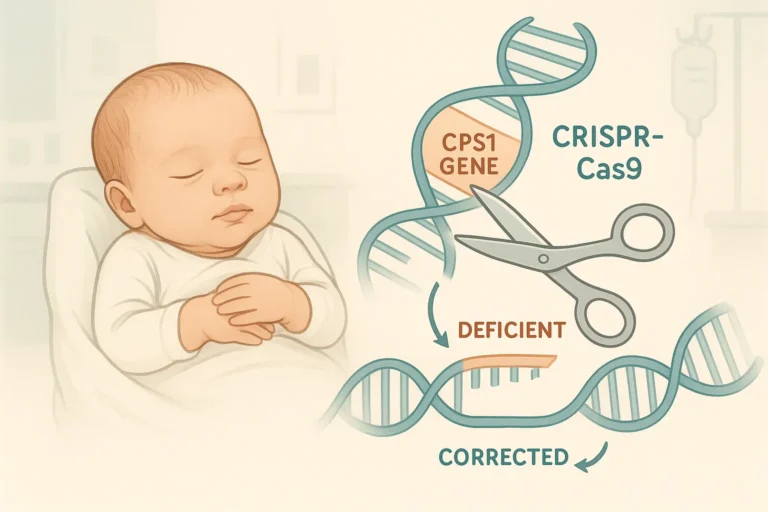
New Era for Gene Therapy: Personalized CRISPR-Cas9 Treatment for CPS1 Deficiency in a Newborn
Discover the first personalized CRISPR-Cas9 gene therapy that precisely corrects CPS1 deficiency in a newborn via base editing A>G. Delivered by liver-targeted lipid nanoparticles, this rapid six-month development achieved durable genomic correction and normalized ammonia levels, opening a new era in safe, agile treatments for ultra-rare metabolic disorders.

Pythia: An AI Tool for Precise and Predictable Genomic Integrations via CRISPR Microhomologies
Predictable AI-guided gene editing: deep learning–optimized microhomologies enable precise transgene integration in human cells, embryos, and adult neurons, surpassing conventional methods.
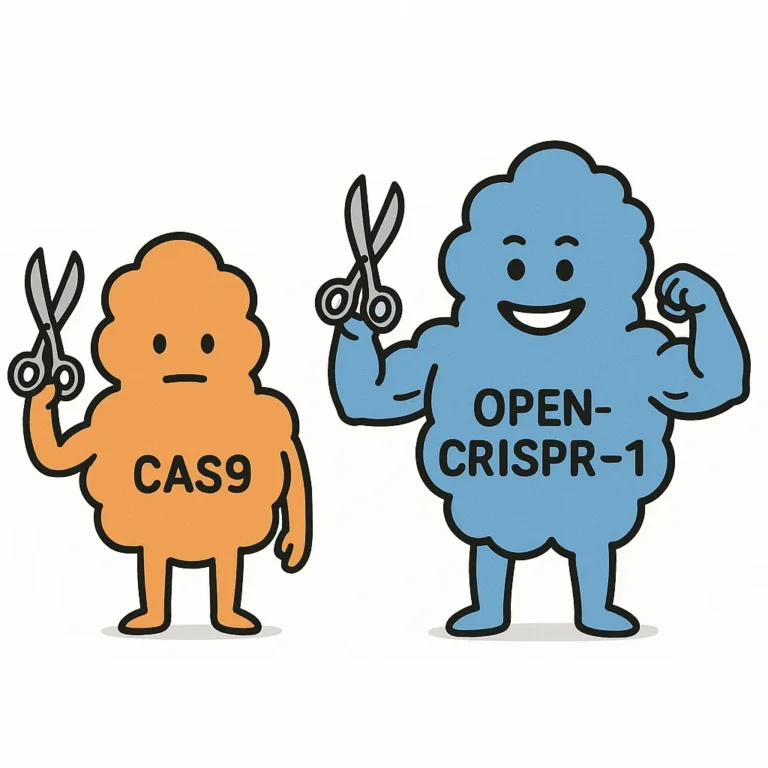
OpenCRISPR-1: Designing Next-Generation Genome Editors via Artificial Intelligence
An innovative artificial intelligence approach enables the design of more efficient CRISPR–Cas9 editors